99 Nights After an Update: Recheck One Changed Function Before Rebuilding the Whole Plan
A changed lobby, item or seasonal activity can make old notes confusing without invalidating everything you learned. Verify the current official source, inspect the relevant function and make one focused adjustment to your next run.
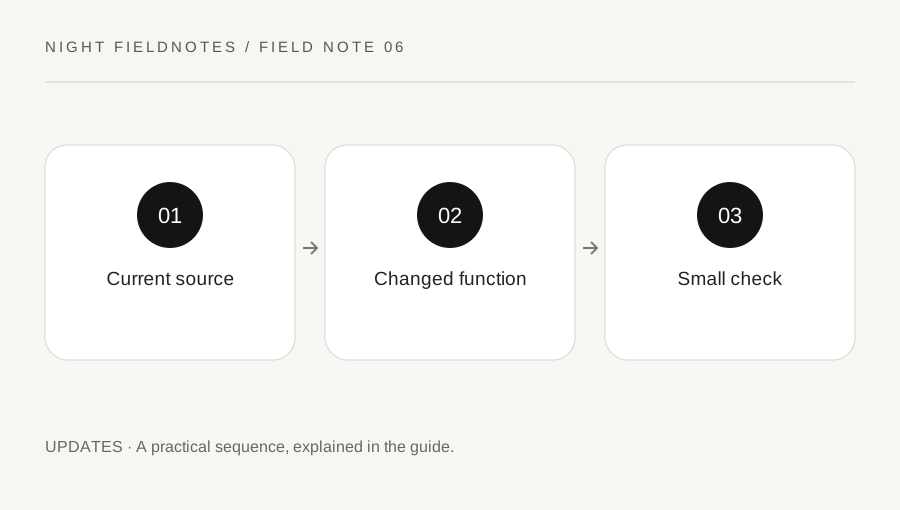
Original explanatory diagram. Examples illustrate a method or decision; they are not claims of personal testing.
Find the current official context
Begin with the official 99 Nights experience by Grandma's Favourite Games and the creator links reached from that page. Distinguish current information from a reposted seasonal image or a video about a previous version. Keep the date with any note you plan to share.
Roblox's creator spotlight is a dated interview about the game's development and setting, not a permanent current event schedule. Use historical material for context while checking present activities in the current client and official announcements.
For example, a past seasonal activity can appear again in search results long after its availability changed. The familiar name alone does not establish that its currency, reward or access requirements remain the same. If the current information does not answer the question, leave it unconfirmed rather than inventing a start time, repeating an old code or promising that a particular reward is still obtainable.
Identify the function that affects your plan
Read the changed information in relation to a task you actually perform. Is the question about a class description, a camp interaction, an item, a control or an event requirement? Focus on that function instead of trying to relearn the entire game from every announcement.
Compare the current description with your old note. Keep the old note as historical context if useful, but mark the part that no longer matches. Do not preserve a specific price, percentage or recipe merely because it has appeared in several copied guides.
Suppose an item interaction looks different from what the group remembers. Inspect the prompt and the current requirement before spending supplies or moving the whole camp around it. The difference may concern the interface, eligibility or actual behavior. Those possibilities require observation, and none is resolved by immediately declaring that the entire survival plan no longer works.
Check one ordinary situation
Choose a manageable scenario where the relevant behavior can be observed through supported play. Keep the goal narrow enough that a result is recognizable. For a changed interaction, confirm the starting state, perform the action and inspect the resulting state.
Do not change class, equipment, route and controls simultaneously unless the current system requires it. Several changes can make the next run feel different while hiding which adjustment mattered. If you cannot keep conditions comparable, state that limitation in your conclusion.
For example, a camp task completed more smoothly after an update may also benefit from clearer teammate communication or a better layout. Do not attribute the entire improvement to a patch without evidence. Conversely, one awkward attempt does not establish that a new function is broken. A focused observation gives the group a useful question and a record of what happened, rather than another broad claim based on the mood of the session.
Update instructions and leave unsupported claims out
After the check, rewrite the relevant step in your personal or group notes. Include the current visible control, requirement or limitation that mattered. Remove obsolete instructions before asking a new teammate to follow them.
If the observation suggests a technical issue, separate expected and actual behavior and use the appropriate official reporting route. If it concerns another player's conduct, use Roblox's specific reporting tools rather than presenting the problem as an update bug. Keep factual context and avoid publishing private information.
The next session should have one clear adjustment, such as confirming a revised interaction before gathering for it. You do not need to predict future content or endorse a new purchase. Good update reading protects useful habits while replacing outdated assumptions. It helps the group remain curious about changes without turning every announcement into a confident tier list, a guaranteed reward claim or a demand to rebuild the entire camp before checking the function that actually changed.
A practical checklist
Choices are saved in this browser. Reset them here or clear this site’s browser storage.
Questions that come up
Does a historical creator interview establish the current event schedule?
No. Treat it as dated context and verify current availability through the experience and official announcements.
Should every update trigger a new class purchase?
No. Inspect the actual change and its relevance to your tasks before considering any spending.
What makes an update note useful to teammates?
A dated source, a clear current instruction and an honest description of the conditions you checked.
References & scope
Background references checked on 18 October 2026. Worked examples and diagrams are original teaching material.