99 Nights Solo Planning: Choose the Next Task Without Creating Three New Emergencies
Playing alone makes every task compete for the same attention. Use a simple triage check to choose what needs doing now, what can wait and which tempting detour would leave the camp unable to support your return.
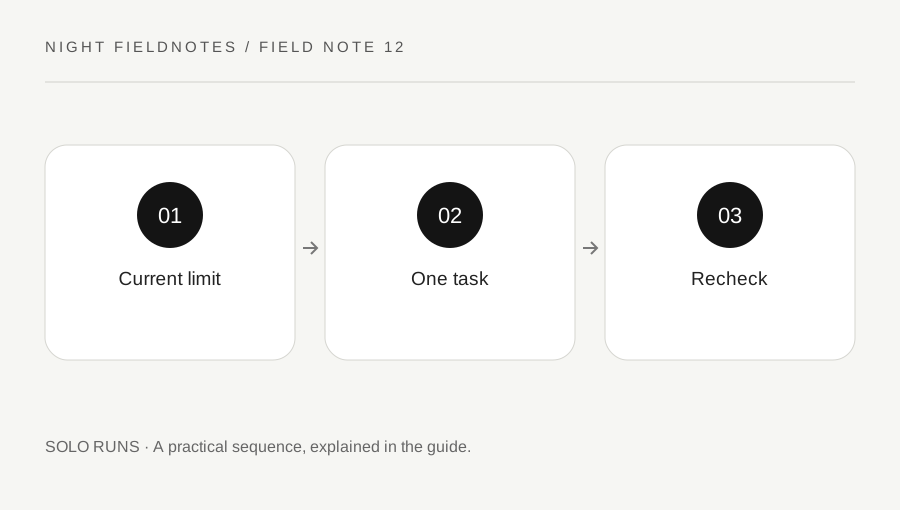
Original explanatory diagram. Examples illustrate a method or decision; they are not claims of personal testing.
Read the present state before choosing a goal
Pause at a manageable moment and inspect the actual character and camp state. Identify the limitation most likely to interrupt the next useful action. This might concern food, the fire, available equipment or the ability to return from a planned trip.
Do not treat every low-looking quantity as equally urgent. A resource can be modest but sufficient for the next action, while another missing function prevents the plan entirely. The purpose is to identify the current bottleneck using the live game, not to apply a permanent list of exact reserve amounts.
For example, an ambitious exploration target may be appealing, but if the camp cannot support a normal return, the trip creates another task before resolving the first. Choose a short preparation that restores the missing function. Solo play rewards a clear sequence because nobody else is automatically handling the task you decided to postpone.
Choose one task with a completion condition
Describe the next task so you can recognize when it is done. "Bring the materials required for this currently selected preparation" is clearer than "collect everything nearby." A defined finish prevents a useful trip from expanding indefinitely.
Include the return and use of the supplies in the task. Gathering is incomplete in practical terms if the result never reaches the camp function it was meant to support. Check the route and current carrying limits before leaving.
Suppose you need one missing category for a planned craft and encounter several unrelated objects. Decide whether they fit the available space and whether collecting them changes the return plan. You can choose the detour, but name the tradeoff. A solo plan becomes fragile when every unexpected find silently becomes a new priority and the original need remains unresolved while more time and attention are spent farther from camp.
Use a stopping rule when conditions change
Before departing, identify what would end or redirect the trip. Examples include completing the intended load, losing a clear route or reaching a character state that makes the return uncertain. Use current observations rather than a fixed timer copied from another player's run.
If the conditions change, reassess the whole plan. A partially completed task can still justify a return when it restores something important. Do not remain outside solely because the trip would look incomplete in your notes.
Keep encounters connected to the goal. An optional fight may be interesting, but its cost includes the supplies carried and the camp preparation still waiting. Choose deliberately instead of assuming every visible threat must be defeated. This does not prescribe avoiding all combat; it asks whether the current engagement serves the task you chose and whether you retain a supported route back afterward. Solo survival often depends on recognizing when a sequence is becoming too complicated for the resources currently available.
Recheck after completing the task
When you return, use the supplies and inspect what changed. The next bottleneck may be different. Do not automatically repeat the last route because it worked once, and do not start the ambitious goal until its prerequisites are actually in place.
Keep a tiny review of a failed sequence: what was urgent, what you chose and which unresolved task caused the next problem. This is more specific than concluding that solo play requires an entirely different class or a rare item every time something goes wrong.
For the next run, improve one transition between tasks. Perhaps you should confirm a craft requirement before gathering or finish a camp preparation before extending exploration. Triage does not remove uncertainty or guarantee a long run. It reduces avoidable conflicts between tasks by giving each action a purpose, a finish and a recheck. That makes the survival loop easier to manage when every gathering trip, encounter and preparation depends on the same player.
A practical checklist
Choices are saved in this browser. Reset them here or clear this site’s browser storage.
Questions that come up
Is there one permanent priority order for every solo run?
No. Use current conditions and the next action you need to perform, rather than a fixed reserve table.
Is a partial return always a failed trip?
No. It can restore a useful function or prevent the current load from becoming an avoidable loss.
Should every visible enemy become the next objective?
No. Decide whether the encounter serves the chosen task and whether you can still complete the return.
References & scope
Background references checked on 18 October 2026. Worked examples and diagrams are original teaching material.