99 Nights Supply Handoffs: Say What Arrived, Where It Is and What Remains
A teammate can bring the right supplies back and still leave the camp waiting if nobody understands the delivery. Use a short handoff that connects the gathered material to its intended use and updates the remaining need.
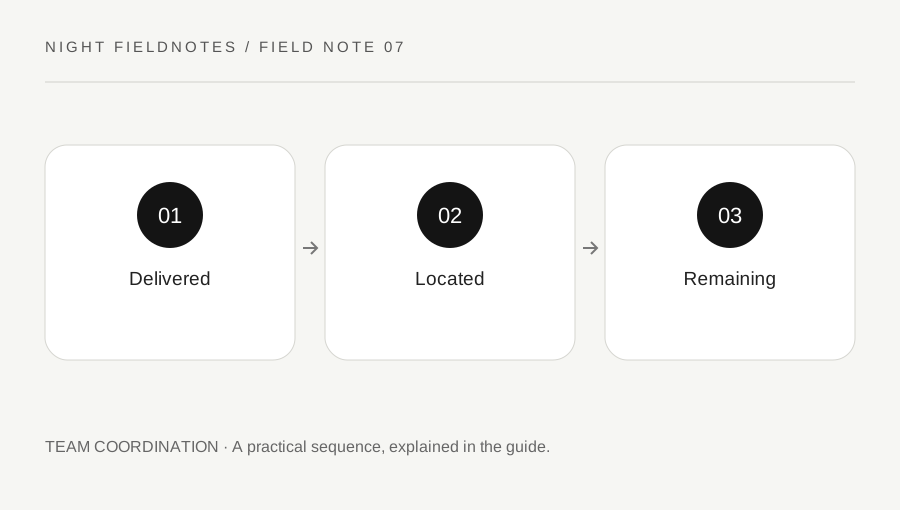
Original explanatory diagram. Examples illustrate a method or decision; they are not claims of personal testing.
Make the request precise enough to finish
Before a player leaves, identify the function the supplies are meant to support. Read the current requirement together when possible. A request for "more materials" can send someone gathering a category the camp already has while the actual missing item remains unavailable.
Name the category or item as displayed in the current game and identify the receiving player or location. Do not invent a permanent recipe count from memory. If the requirement changes, update the request before the collector returns with a load that no longer addresses the bottleneck.
For example, the player preparing a craft can state which part is missing and where arrivals should be placed. The collector then knows how to recognize useful progress. This is a small communication step that complements broad team roles: it explains the specific exchange between two tasks rather than simply assigning one player to gathering for the entire session.
Report the actual delivery rather than the trip
On return, use the supported transfer or placement interaction, then say what arrived and where it is. "Supplies returned" describes a journey. "The requested material is beside the preparation area" connects the journey to the next action.
If the current interface supports a quantity check, use the actual number shown. Do not estimate a complete requirement from the apparent size of a pile. If you delivered only part of the request, say that clearly. A partial delivery can still be useful, but the receiving player needs to know what remains.
Suppose the collector found a different useful item instead of the requested category. Report the substitution rather than assuming everyone will infer it from the ground. The group can then decide whether the new item changes the plan or whether another trip is still required. Honest description prevents the camp from waiting for a completion that no one actually delivered.
Let the receiving player close the loop
The receiving player should confirm whether the intended function can proceed. This can be a short response after reading the current requirement or performing the supported interaction. It prevents a silent gap in which the collector believes the task is complete while the camp still lacks something essential.
If the material cannot be found, describe the location using a shared landmark. Avoid moving several piles at once while another player is searching. Once the immediate problem is resolved, improve the agreed delivery point for the next trip.
If the requirement is still incomplete, update the missing category instead of repeating the original request unchanged. A useful handoff produces new information. It also gives the collector permission to switch tasks when the job is done, rather than continuing to gather the same resource because nobody said the camp had enough for the current preparation. These small confirmations reduce duplicate effort without needing constant voice or text commentary.
Review repeated confusion at the transfer point
If handoffs repeatedly fail, inspect the transfer process rather than blaming the collector's route. Is the request too broad, the receiving area unclear or the requirement not being checked? Each failure occurs at a different part of the chain.
Try one correction, such as a consistent delivery landmark or a short "arrived and remaining" call. Keep the process brief enough to use during normal play. A complicated inventory report after every object can consume more attention than it saves.
The goal is a dependable bridge between gathering and camp use. It works for a small group because everyone can understand the same simple state: requested, delivered and ready, or requested, partly delivered and still missing something. Current requirements and actual quantities matter more than memory or the effort of the trip. A collector may have worked hard while the original task remains incomplete; acknowledging both facts helps the group solve the real limitation without confusing effort with a confirmed result.
A practical checklist
Choices are saved in this browser. Reset them here or clear this site’s browser storage.
Questions that come up
Does a completed gathering trip mean the preparation is ready?
No. Confirm the actual delivered requirement and whether the receiving function can proceed.
Should partial deliveries be hidden until everything is complete?
No. Report them honestly so the group can use what arrived and plan what remains.
Does every item need a long report?
No. Keep handoffs concise and focused on the task, location and unresolved need.
References & scope
Background references checked on 18 October 2026. Worked examples and diagrams are original teaching material.