99 Nights With a New Teammate: Teach One Complete Task Before Assigning a Whole Role
A new player learns more from one task they can finish than from a rapid list of everything the camp needs. Agree on a simple activity, demonstrate the relevant interaction and let the player confirm the result before adding responsibility.
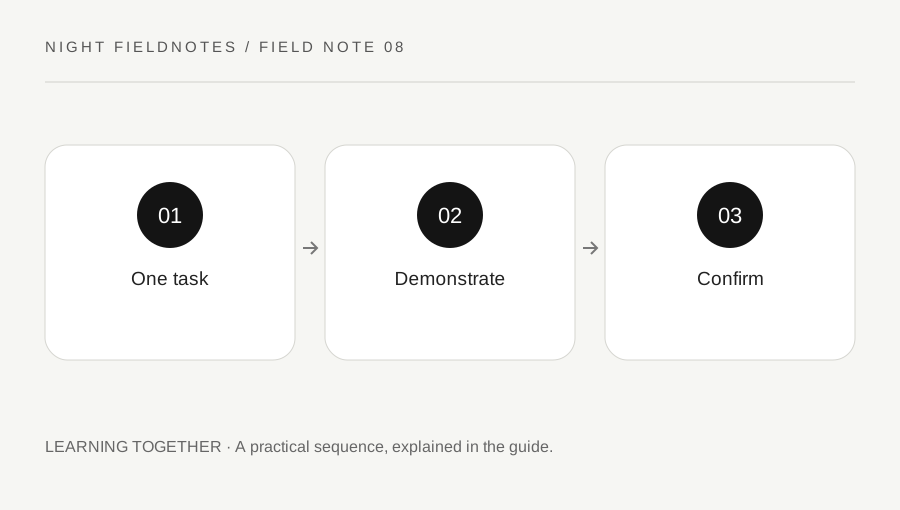
Original explanatory diagram. Examples illustrate a method or decision; they are not claims of personal testing.
Agree on the session before beginning
The official experience invites players to build a camp with friends. Before starting together, ask whether the session is for learning, a particular objective or a longer survival attempt. A new player and an experienced group can have different expectations without either being wrong.
Choose a small first task that the current run and equipment support. Do not assign someone to manage an entire camp function before they know where the relevant items and controls are. Avoid assuming that prior experience in another Roblox game teaches the specific interactions in this one.
For example, a first activity can be a short nearby collection and return using a verified route. The learning goal is to recognize the item, carry it through the supported interaction and place or use it where the camp needs it. That complete sequence is more understandable than a general instruction to "handle resources" while everyone else leaves.
Demonstrate the action and explain its purpose
Show the relevant interaction in the current game, then explain what it enables. The purpose helps a player adapt when the exact item location changes. Keep the explanation short enough that they can still see the prompt and understand the control.
Use the control Help appropriate to their device. A keyboard instruction may be useless to someone on a touchscreen, and a visual demonstration can hide the input that actually triggered it. Ask the player to identify the visible action before expecting them to perform it under pressure.
Suppose the experienced player performs several interactions quickly and says "do that." The learner may not know which action transferred the item or which consumed it. Slow down at the meaningful transition and distinguish it from ordinary movement. Do not promise that every item can be recovered after an incorrect action; read confirmations and avoid using valuable or difficult-to-replace items as an unexplained first demonstration.
Let the player finish and read the result
After the demonstration, let the learner perform the task rather than taking over at the first hesitation. Stay close enough to answer a question when the situation permits. Ask what changed in the interface or camp after the supported interaction.
This check matters because an animation or movement can look like success without completing the intended task. Help the player identify the actual completion signal: the item is in the agreed location, the current requirement changes or the relevant function becomes available.
If the task fails, diagnose the first unclear step. Was the item different, the prompt unavailable or the control misunderstood? Correct that step before adding a more difficult route. Keep the feedback descriptive and specific. "The transfer did not occur; check this prompt" teaches more than a broad judgment about the player's skill, especially when the actual problem is an unfamiliar device layout or an incomplete explanation.
Expand responsibility from demonstrated understanding
Once the player can complete the sequence and explain its purpose, add one variation. This might be a slightly different collection point or an updated requirement. Avoid expanding the task and changing the entire role simultaneously.
Agree on when the player should ask for help or return rather than improvising a longer trip. A clear uncertainty rule can be as useful as an action instruction: if the expected prompt is absent or the route becomes unclear, stop and communicate before consuming more resources.
After the session, ask which step remained confusing and use that to plan the next short lesson. Teaching does not need to turn a shared game into a lecture. A complete task, a visible result and one manageable variation provide a strong foundation. The new teammate can contribute while learning, and the group avoids mistaking a vague role assignment for a skill the player has already had a fair opportunity to practice.
A practical checklist
Choices are saved in this browser. Reset them here or clear this site’s browser storage.
Questions that come up
Should a beginner immediately manage a whole camp function?
Start with a complete manageable task, then expand responsibility as the relevant interactions become clear.
Is watching an experienced player enough?
Not always. Let the learner perform the action and identify the completion signal.
What should happen when a prompt differs from the demonstration?
Pause and inspect the current state instead of forcing an assumed interaction or consuming resources blindly.
References & scope
Background references checked on 18 October 2026. Worked examples and diagrams are original teaching material.