99 Nights Class Choices: Compare the Perk You Can Use Now
When comparing class options in the current lobby, read the actual starting benefit and unlocked state before choosing. A class name or tier list cannot tell you whether its available function fits the tasks you perform in your next run.
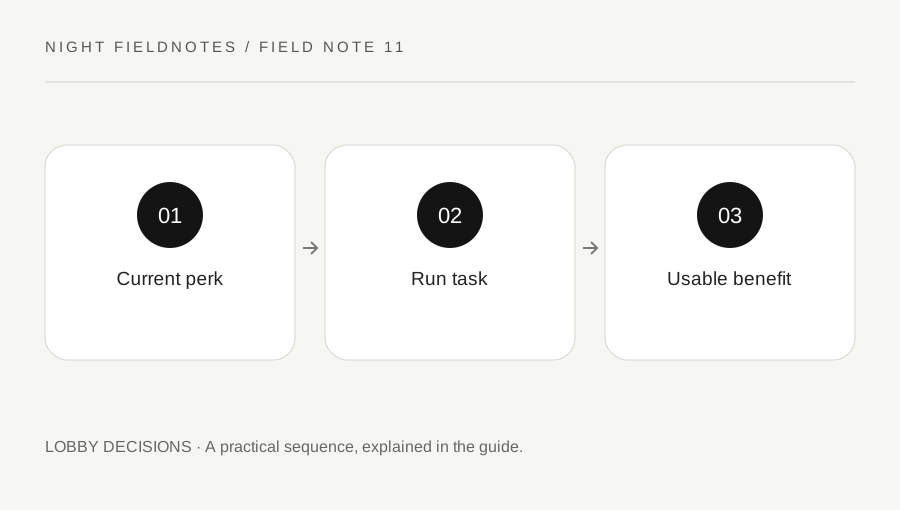
Original explanatory diagram. Examples illustrate a method or decision; they are not claims of personal testing.
Read the current option rather than its reputation
Inspect the class description shown in your current lobby and distinguish a starting item, an immediate perk and a later benefit with requirements. Do not combine every listed feature into an assumption that a newly selected option already has its full potential.
Record the function in ordinary words: improves a particular task, provides a tool or changes a condition you can actually identify. Avoid copying prices, percentages or availability from an undated tier list. Those details belong to the current supported interface and official announcements.
For example, a later benefit may sound ideal for your preferred role, but the useful decision today concerns what your account can use now and what is required to reach that later state. Read the requirement before treating the future feature as an immediate solution. This guide does not publish a permanent class ranking or promise that any named option guarantees survival.
Match the benefit to a task in the run
Choose a task you regularly perform and explain how the available benefit would help it. The task might involve gathering, handling equipment, supporting camp or managing an encounter. Keep the explanation concrete enough that you can observe whether the benefit mattered.
Consider what the group already covers. Another player having a similar function does not automatically make a choice useless, but it changes which limitation your selection is meant to solve. In a solo run, examine what support the choice cannot provide as well as what it improves.
Suppose a class offers an appealing resource-related benefit, but your repeated losses come from getting disoriented on the return. That benefit may still be enjoyable, yet it does not directly fix the navigation problem. Separate preference from diagnosis. A good choice can fit your preferred style while you practice the unrelated habit that is actually ending runs.
Check ownership, selection and spending separately
An option being displayed is not the same as being owned, equipped or available under the current conditions. Read the actual state and confirmation before committing any in-game currency or Robux. Do not assume a preview has already selected the class for the next session.
If the interface presents a purchase, inspect what it grants and whether the benefit is immediate or conditional. This page does not recommend buying a particular option or spending to repair an unexplained problem. Compare the available choice with what you can already do through normal play.
For example, a player can own one option but accidentally begin with a different selection. Check the visible selection before starting and verify the actual starting state once the run begins. If the expected benefit is absent, read the current requirements rather than purchasing again. A state-checking mistake, an unmet condition and a technical issue are different possibilities and should not be merged into a single assumption.
Evaluate the choice in one ordinary session
Set a small question for the run: did the current perk make the intended task easier to perform or reduce the bottleneck you identified? Observe the answer without attributing the entire result of a long session to the class alone.
The map, teammates, decisions and available supplies can all change between runs. If the result is mixed, note the conditions. "Useful during this gathering task but did not address my return-route confusion" is a better conclusion than a universal best-or-worst label.
Retain a choice you enjoy when it fits your goals, and improve the separate skills it does not replace. Recheck descriptions after updates before repeating old recommendations to friends. Thoughtful class selection begins with current readable information and ends with a practical observation about a task. It does not require predicting every future update, chasing the highest rarity or assuming that spending removes the need to understand the survival loop.
A practical checklist
Choices are saved in this browser. Reset them here or clear this site’s browser storage.
Questions that come up
Does a high tier-list position guarantee a better run?
No. Evaluate the current available function, your tasks and the actual conditions of the session.
Can a listed later perk be treated as active immediately?
Not without checking the current unlock state and requirements shown for your account.
Should I purchase again if an expected benefit is missing?
First verify selection, ownership and requirements. Repeating a purchase is not a reliable diagnostic step.
References & scope
Background references checked on 18 October 2026. Worked examples and diagrams are original teaching material.