99 Nights Camp Threats: Keep an Entrance, a View and a Recovery Route
When a threat reaches camp, an improvised response can block the very routes the group needs. Inspect approaches before the pressure rises, communicate a specific visible threat and keep the essential camp functions accessible while responding.
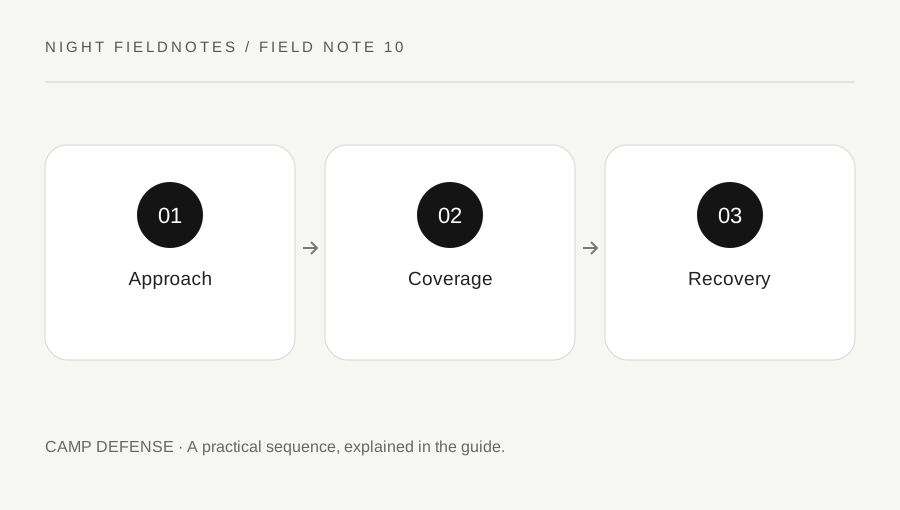
Original explanatory diagram. Examples illustrate a method or decision; they are not claims of personal testing.
Read the actual approach to this camp
Start with the terrain and structures present in your current run. Identify where players usually return, which directions are difficult to see and how the group reaches its essential supplies. Do not assume that a copied layout produces identical sightlines on every map or after every camp change.
Keep the observation specific. "The approach beside this structure is hard to see" identifies a problem you can inspect. "The camp is completely safe" claims more than the visible conditions establish.
For example, a structure that improves one side may hide the view toward a frequently used route. Before pressure develops, walk that route and check what a player inside camp can actually see. If construction options are available, evaluate them against the current problem rather than placing objects purely because an old blueprint presents them as universally optimal. This guide does not prescribe a fixed attack schedule or an unverified creature-counter mechanic.
Divide attention without creating isolated fights
When a visible threat appears, call its location using a landmark the group recognizes. Add the movement or immediate problem: approaching the return route, obstructing access or threatening a teammate. Avoid a long excited description that hides where another player needs to look.
Assign a simple response according to the equipment and current state actually available. One player may watch the approach while another keeps an essential task moving. Do not send everyone to chase the same target and leave the camp's immediate needs unobserved.
Suppose a teammate returning with supplies sees danger along the usual entrance. The useful call includes an alternative receiving point or a reason to wait. If the whole group rushes out without checking the returning player's route, the response can create more confusion than the original threat. Coordination should preserve a shared view of what the camp needs to remain usable during the encounter.
Keep the recovery path readable
Before pursuing a target away from camp, identify the way back and what would cause you to stop. Terrain, darkness and attention spent on the fight can make a familiar route harder to recognize. Do not let the pursuit become a new exploration trip without a return plan.
Inside camp, avoid crowding an essential interaction or blocking the route another player is trying to use. Reposition through supported movement and keep the relevant supplies findable. If the layout contributes to confusion, note it for a later adjustment rather than rearranging everything during the most demanding moment.
Read your actual health, equipment and resource state. A player who can no longer perform the intended combat action may be more useful communicating, moving supplies or recovering. This is a situational choice, not a claim that a particular location grants immunity. Use the current game's feedback and do not continue a risky behavior solely because an earlier encounter ended successfully under different conditions.
Review the first coordination failure
After the threat passes, inspect the sequence before replacing the entire camp plan. Did the group fail to see the approach, misunderstand a call, crowd a route or chase too far? Those problems need different corrections.
Choose one change that can be tested in the next relevant situation. A clearer landmark call, an unobstructed return path or a better location for a supply category may be enough. Avoid assuming that every difficult encounter requires a new purchase or a completely different class.
The measure is whether the camp continued to support useful actions and whether players retained a clear way to recover. You cannot guarantee that every threat will be harmless. You can improve how the group observes, responds and regains control afterward. Keep the review grounded in current behavior and the actual run rather than publishing a permanent attack timetable or a supposed safe position that the source information and your observations do not establish.
A practical checklist
Choices are saved in this browser. Reset them here or clear this site’s browser storage.
Questions that come up
Does this guide list exact camp attack days?
No. Observe current warnings and behavior rather than relying on an unverified permanent schedule.
Should everyone chase the same threat?
Only if the actual situation justifies it. Preserve awareness of camp functions, returning players and another approach.
Does a successful layout guarantee safety?
No. Recheck visibility, access and current conditions instead of treating a blueprint as a universal protection.
References & scope
Background references checked on 18 October 2026. Worked examples and diagrams are original teaching material.