99 Nights Camp Layout: Keep Supplies Findable and Routes Usable
An organized camp reduces the time between returning with supplies and using them for the next task. Plan where functions belong, walk the route under pressure and keep essential items from disappearing into an unexplained pile.
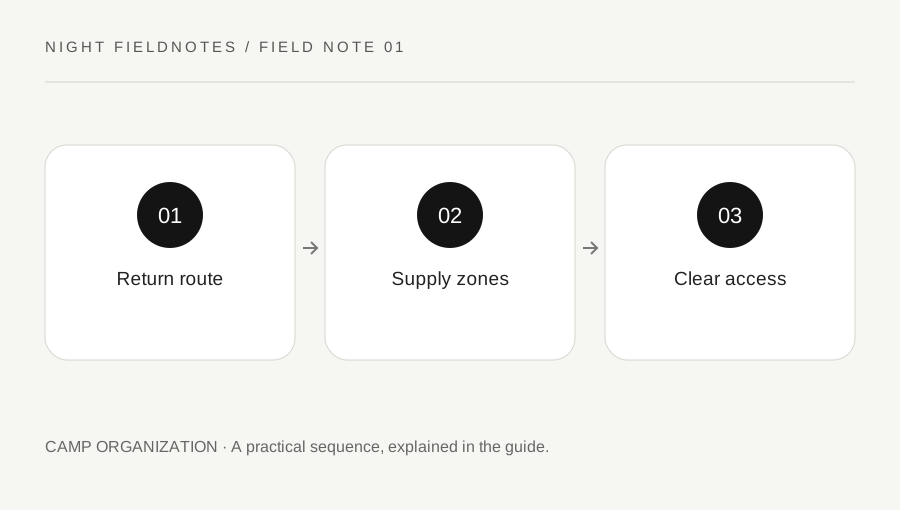
Original explanatory diagram. Examples illustrate a method or decision; they are not claims of personal testing.
Organize by the next action
The official 99 Nights in the Forest description centers on building a camp with friends. Treat the camp as a place where players need to perform actions quickly, rather than a display of everything collected. Identify the functions your current run actually uses: maintaining the fire, preparing food, crafting and organizing equipment.
Use the supported placement and storage interactions available in the current game. This guide does not prescribe an unverified container capacity or a universal grid layout. The principle is to group items where the next relevant action is easy to understand.
For example, supplies waiting for a planned craft should be identifiable to the player preparing it. If they are mixed into a general pile, another teammate may consume or move them without knowing the plan. A clear location and a short call can prevent the same group from repeatedly collecting a resource it already brought home.
Walk the path of a returning player
Follow the route from the usual return direction to the place where you unload and then to the essential camp functions. Look for visual clutter, confusing piles or placed objects that make the route awkward. A layout should work for someone carrying supplies and watching the current conditions, not only for the player who designed it.
Ask a teammate to identify where a particular category belongs without a long explanation. If they cannot find it, simplify the arrangement or improve the call. Avoid assuming that a decoration or an unusual stack is an obvious sign to everyone else.
Suppose a player returns while the group needs immediate food preparation. If the receiving area and the next interaction are clear, the delivery can become useful quickly. If the player must search through scattered items or ask several questions, the camp's organization is adding another task at the moment the team already has an urgent one.
Preserve access when improving the camp
Before adding or moving a structure, check the routes players currently depend on. An addition that appears protective or convenient can obstruct sight, movement or access to another function. Confirm the actual game geometry rather than assuming every object behaves the same way.
Keep the group's usual approach and retreat in mind. Do not create a layout that requires everyone to pass through one confusing collection of items merely to reach the place they need. When the current build or placement rules limit your options, explain that limitation and choose the clearest available arrangement.
Recheck after a major camp change. The original route may no longer be readable, and a supply zone may now be hidden behind something new. Organization is a continuing practical check, not a permanent blueprint. If a layout element is no longer helping the run, revise it rather than retaining it solely because the group spent time building or arranging it earlier.
Review search time instead of neatness
After a difficult sequence, ask where players spent time searching or became confused. Was food hard to locate? Were crafting materials mistaken for a general reserve? Did a new structure make the return path awkward? These observations identify a useful correction without requiring the camp to look perfectly tidy.
Change one thing at a time and explain it to the group. A renamed supply location or clearer unloading area may be enough. Moving every category simultaneously can temporarily make the camp harder to use because everyone must relearn the arrangement.
Keep the purpose practical: supplies should reach their next supported use with less confusion. The layout does not replace fuel planning, food gathering or survival awareness. It helps those tasks connect. A strong camp organization habit is one a newly briefed teammate can follow, the current group can maintain and returning players can use even when attention is divided by the next challenge in the forest.
A practical checklist
Choices are saved in this browser. Reset them here or clear this site’s browser storage.
Questions that come up
Does this page give a fixed camp blueprint?
No. Use current placement rules and the terrain of your run. The guide evaluates access and organization.
Should everything be moved at once?
Usually a small explained change is easier for the group to learn and assess.
Is a neat-looking camp automatically efficient?
No. Judge whether players can find supplies and reach the functions they need.
References & scope
Background references checked on 18 October 2026. Worked examples and diagrams are original teaching material.